Friday, September 30, 2022

College Recruiting Resources- Facebook groups, Websites for High School Athletes


See below for some really great resources for college recruiting advice and advice for the High School athlete looking to play at the next level... 

Educating Parents of HS Athletes On The College Recruiting Process https://www.facebook.com/groups/parentsofhsathleteswantingtoplayincollege/ 

Looking For A FULL RIDE?: An Insider’s Recruiting Guide https://rlopezcoaching.com/ 

College Soccer Recruiting Resources for Parents/Players - by Sports Recruiting USA https://www.facebook.com/groups/collegesoccerrecruitingresources/ 


Erica Kristin 

The Complete Guide to College Soccer Recruiting https://www.facebook.com/groups/2646049092369991/ 

The Recruiting Code 

Good Luck!

Saturday, March 21, 2020

Should US Soccer Make All Online Grass-Roots Courses FREE?


The period we are in as a country at this time gives us a unique opportunity, a bit of free time to educate at the grass-roots level? If the 4v4, 7v7, 9v9 and 11v11 online courses were available for no charge, do you think many would take advantage of it? Each of the 4 online courses are $25 each.

I think that some people that hadn't taken the courses because of "not having the time" may have the time right now and might do so if they were at no cost. Even post-crisis, shouldn't these courses be free anyway?

Also, it is a great opportunity to get your older players involved in the coaching world, introducing them to methodology, coach education and how to teach the game they love, hopefully inspiring them to take it further once their playing days are over/they get older. 
This could go a long way in bringing college & high school students into the coaching pathway.

To be clear, I'm talking about grass roots, introductory courses, not anything D or above. I value the education, and especially the collaboration, I have received from USSF & USC (NSCAA) in-person courses.

I just think that if we have grassroots coaches at the start of many soccer "careers", then they should know what the heck they are doing to start those players off on a good footing. What do you think?

Monday, March 16, 2020

TRAINING AT HOME: Individual Training for Your Player During the Covid-19 Soccer Shutdown


Coaches, like their player’s parents, are wondering how their pupils will take to all the changes in their young lives during such times. Most of you are thinking about ways to keep them active and able to take their mind off the pressures that an event like this can bring about.

When it comes to learning, most kids respond to video…just ask them how they find out “how to” anything…most YouTube it.  There is a reason why 10 year old kids make millions on YouTube, they understand what they like and do it. Written instruction fails because it only provides the what, but doesn’t show the “how”, especially for visual learners. To have a coach explain the why within the video is the final piece of magic that makes it work.

As I searched for solutions, I tried to stick to videos and apps with “how to” or “show me” videos that the players can follow along with. These are just a few resources out of hundreds available. If you have an idea, please let me know, send me links or an email to paul@ableworx.com and I can append this article.

The recent Covid-19 shutdown of soccer has been a kick in the ass for all of us coaches. More so for players and parents. Please stay well everyone ...and don't forget to train...alone!

------------------------------------

SST – Soccer Specific Training

SST is a brand that I trust and have recommended players to for supplemental training many times over the years. Now the rest of the world gets to experience SST’s individual training.

One of NJ’s premier training organizations, headed by USSF A licensed Mike Turtle and assisted by my friend Will Gould and others are offering a daily session at 2pm EST on their Facebook feed. This is their 1ST session from 3/16/2020 (available on their Facebook feed). Once this pandemic was announced and fields and gatherings were off limits, they quickly jumped to make this available, for free, to all players (read the article at link below).

Admirable, to say the least. Good job guys!

WHAT YOU NEED:
4 “cones” (or objects to use as cones…solo cups work); a ball; a bottle of water; a winning attitude.

YouTube: SSTSkillz https://www.youtube.com/channel/UC9YVp2I9GCZzttCmVKhyq-Q

------------------------------------

A-Game Soccer Training


One of the top footskills & Soccer IQ trainers in NJ, my friend, Danny Vedder, is offering his talents to teach kids what he knows free of charge over this unfortunate break. Great job Coach!

Coach Danny is posting a training video each day on his Facebook feed:
https://www.facebook.com/agamesoccer/

A-Game's website: https://a-gamesoccer.com/

------------------------------------

Techne Training
*This is great for teams as progress is trackable by managers and coaches.

Techne provides a perfect platform for individual training for the players to work on their own. They earn Techne socks, much like martial arts belts when they “level-up”. The platform is also view-able by managers and coaches so they can keep track of who’s “doing their homework” and who isn’t.


------------------------------------

Beast Mode Soccer (app & YouTube videos, free & pay) 


While I am not familiar with the app, I can say that I have used the Beast Mode videos for training ideas and individual training. 

You can’t argue with success when you see Alex Morgan working with the coach!

They have several different training programs along with mental training for the game. Worth a look.


------------------------------------

Coach Marcus DiBernardo


Online Soccer Skills Academy

Click here for Individual Skills Instruction


------------------------------------

Stefano's Training Systems 

YouTube Channel: https://www.youtube.com/channel/UCF3ufd6CDKrfZjJervlOg7A/featured

PRINCIPLES & EXERCISES FOR INDIVIDUAL TRAINING | SOCCER AT HOME
video: https://youtu.be/fGIeJ_8nhvM

------------------------------------


OpportunityElite - Player Development

Some really fantastic ball mastery sessions...

50 Ball Mastery Techniques | The Ultimate Ball Mastery Video
https://youtu.be/Y3gTLFibOtA

YouTube: https://www.youtube.com/channel/UC1VFWFLRxPLdBUpPfQpesVQ

Facebook: https://www.facebook.com/OpportunityE/


------------------------------------

Tom Byer: Soccer Starts At Home (for the younger player)


*Website from Houston Dynamo on Tom’s “Soccer Starts at Home”:

------------------------------------

Ball & A Wall Workouts
“Ball & A Wall” workouts are the absolute simplest form of getting your touches in. Whether it’s an overturned patio table or bench, an actual wall in the garage or basement, bottom step, front of Mom’s favorite couch or just a curb in the street (be safe), they all make for an excellent “partner” to train with. 

Search YouTube for more ideas to incorporate turns, surfaces of the foot, different moves, volleys, half-volleys, etc. such as:

40 individual ball control exercises https://youtu.be/8GoaT29sVnM (my apologies for the 70’s theme music LOL)


Tuesday, October 16, 2018

How to Enjoy Watching Your Teens Play Sports - Article from Growing Leaders

"You better check yo self before you wreck yo self." - Ice Cube (1992)
Some good, old school rap advice...LOL :-)

Sometimes we miss the mark on why we are having our kids participate in sports in the first place. It's always good to reflect on that, remember why and apply it. 

"When your child is done with sports and the “glory days” are over, what will be left? Will it be more than trophies and news clippings? Hopefully it will be a strong foundation of character that will keep growing as he or she does."
The article "How to Enjoy Watching Your Teens Play Sports" gives some thoughts on keeping perspective and outlining how you can frame conversations with your child/players to get the maximum benefit from their participation in sports.

Growing Leaders is an excellent coaching, parenting, & teaching resource that helps me develop insight into working with players. Please check out their website and material, I'm sure you'll enjoy it.


Saturday, October 13, 2018

Equal playing time in youth sports?...Let's ask a few questions first?


Equal playing time rears its head over and over in youth sports. At what age or point in their development and in what competitions and areas of their sport lend itself to skewing more towards competition and less about development? 

There are a lot of different opinions there so I am leaving that discussion alone. I'd rather talk to personal responsibility and what a player can do to "turn things around" for themselves.

Here is the original article that got me thinking. My comments are for the older player, say middle school and up.

These are the excerpts of the takeaways from the article above (for me at least)...
  1. Not everyone is going to get equal playing time. 
  2. Not everyone is going to get an A on his or her test. 
  3. Not everyone is going to get the same amount of stage time. 
  4. Not everyone can be first chair in the band. 
  5. Not everyone is going to be a starter. 
  6. People earn these things by their performance.
Before you look towards a conversation with the coach...ask yourself (parent's should ask their kid)...
  1. When was the last time you have been to the gym to work on your skills? 
  2. Have you been working in the weight room? 
  3. Have you had a good attitude? 
  4. Have you been working like a team player?  
I'll add a few things...

  • Did you choose to go to the movies with your friends instead of making a training session or hit the gym? 
  • Did you abandon your training regimen because of peer pressure or social activities?
  • Do you even have a training regimen outside of team activities??? (You should!)
  • Did you disregard advice given to you by your coaches regarding the work you needed to put in and expect things to change just because you want them to?
  • Did you worry more about your plans that night than you did in the tactic being learned in training?
  • Did you sit around playing XBox or Fortnite in your "off-season" (There is no "off-season")
  • Do you feel entitled to playing time because of your grade/age? (Ex. Senior over Freshman)
  • etc., etc., etc....you get the gist...IT'S ON YOU!

As a player, if you cannot check all the boxes to everything that would have led to your improvement as a player, then you haven't really earned the right to question your coach, have you?

You should embrace the adversity, obstacles and work (AKA The Grind) of becoming the best version of yourself, mentally, physically, and in relation to the skills and talents related to your chosen sport. It all boils down to having a growth mindset. (watch the growth mindset video)


Regardless of whether your efforts lead to increased playing time or not...focusing on what will produce change is much more effective than a Mom or Dad having a conversation with Coach. Short term and for the long haul...on and off the field. Embrace the grind, do the work and be great!

P.S. FYI...after say, 12 years old, a parent should not be having the conversation, at least at first, with the coach...the conversation should originate with the PLAYER. (Sorry "Lawnmower Parents"!) Parents should empower the player to speak with the coach.


Wednesday, August 22, 2018

Fake It to Make It! "How-To" On Exuding Confidence Even When You Ain't Feelin' It!

Tryouts! Pre-Season!
  • "Will I make the team?"
  • "What does the coach think?"
  • "How do I feel about my chances?"
  • "Am I going to make it?"
  • "Ahhhhh!"


Yeah, it's that time of year for college, high school and middle school soccer players (at least in my neck of the woods). Ugh!

Not allowing your negative feelings to dictate your actions is not easy. Your body language might suffer. You might negatively react instead of absorbing events, thinking, reasoning and soundly formulating how to act. 

This is a time that puts an athlete's confidence to the test...watch the video below to see how you can "trick" yourself into getting into a confident self-image, even if your not quite feeling it at the moment.


Graham Betchart is the director of mental training for Lucid Performance Inc. (Twitter: @trainwithlucid). 

Saturday, August 18, 2018

Getting Recruited 101: Some help in writing to college coaches...


Check out this article from USA Today High School Sports on writing effective emails and communicating with college coaches.

https://usatodayhss.com/2018/3-helpful-examples-for-emailing-college-coaches

Find out more about getting recruited at US Today HS Sports Blog:

https://usatodayhss.com/tag/recruiting-2


Do you have any tips? Leave them in the comments.

Good Luck!
CP

Wednesday, February 28, 2018

I love when I come across an article that I wish I could have shared with my 15 year old self...

There isn't a person alive over 30 that doesn't come across what I call "software for the mind" that they wish they had known or adopted at a much earlier age. This is a great article that gives some insight into how to buckle down, trust the process and think more long term towards your end goals.


The takeaway:


Tuesday, February 27, 2018

A Great Analogy for Player Development...Trust the Process, But Don't Ignore Opportunity When It Stands Before You


So, do we go "low & slow" (read below) ALL the time or is a push by coach or Mom & Dad...or a self-directed-by-the-player plunge into the deep end the best thing for player development? I think a little of both is the recipe. The mastery of knowing when and how is what a coach/parent/player needs to work at. I personally subscribe to sticking to a process until an opportunity comes along that gives the player the chance to make a leap ahead. If you fail, so what? You tried, you go back into the process and wait for the next opportunity...BUT if you succeed!!!

. . . . . . . . . . . . . . . . . . . . . .

Low & Slow (vs. fear)

by Seth Godin | Twitter: @thisissethsblog | Web: http://sethgodin.typepad.com/
My sourdough rye bread failed. For the first time since I've been baking from this starter, this weekend's batch didn't work.
I know why.
I rushed it.
I didn't let the dough ferment long enough.
And then I made the oven hotter, in an effort to get the loaves finished so I could leave to meet someone.
That's not how great bread works. It's ready when it's ready, not when you need it to be.
Of course, the analogy is obvious. Much of the work we do as creators, as leaders, as people seeking to make change--it needs to ferment, to create character and tension and impact. And if we rush it, we get nothing worth very much.
There's a flipside.
Sometimes, we mistakenly believe that we're building something that takes time, but what we're actually doing is hiding. We stall and digress and cause distractions, not because the work needs us to, but because we're afraid to ship.
Impatience can be a virtue if it causes us to leap through the fear that holds us back.

Thursday, February 22, 2018

For athletes, food is fuel... What do you fuel your body with? We count calories, but maybe it's time we spend more time on counting chemicals too?


For athletes, food is fuel...
What do you fuel your body with?
We count calories, but maybe it's time we spend more time on counting chemicals too? 

If herbicides and pesticides kill bugs & plants, what the he** is it doing to your body? How can it affect your growth, performance, recovery, etc.? (...and it's not just food...cosmetics, personal products like shampoo, deodorant, lotions, etc.)

Listen to the podcast below to educate yourself...and read a bit here: http://bit.ly/cpppesticides

Sunday, February 11, 2018

"How To Ruin Your Kid’s Life In Sports" - Great Article!

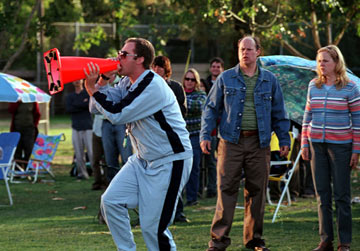
Will Ferrell in "Kicking and Screaming"

I've made every parenting mistake along with every coaching mistake. Mistakes are how you learn, if you pay attention and learn from your mistakes...the old "Lose, but don't lose the lesson" quote comes to mind.

Read below for a great article on how we behave, how we should behave and how we can help our kids (coaches and parents) enjoy the experience of sports participation, especially at the younger ages when they are just beginning and trying to master fundamentals that will be all important for their game later on.

Ask yourself after a little self-reflection...what adjustments do I need to make to help my kid (parents) or my kids (coaches) enjoy the sport more?

Click here: http://bit.ly/how2ruin


Friday, January 5, 2018

Recognize to Recover...US Soccer's outstanding resource for all...Nutrition & Hydration


#USSoccer has a great site called #RecognizeToRecover, that covers everything from #INJURYPREVENTION, #INJURYRECOVERY, #HEAD #BRAIN CONDITIONS #CONCUSSIONS, #HEADINJURY, #CARDIAC CONDITIONS TO #NUTRITION & #HYDRATION. It is an excellent resource for the #player, #parent & #coach.

A great place to start is Nutrition & Hydration. Many misconceptions when it comes to nutrition can be cleared up by reading...find it here: http://bit.ly/ussoccernutrition


When people think about being a good #soccer player, they tend to talk about an individual’s abilities. What most people forget is that for any individual at any level, being a good soccer #player starts with being #healthy and #eatingright.


Soccer is a demanding #sport that requires both #endurance and sprint #ability, and those high-intensity efforts result in a high-energy demand. Especially during periods with many matches or a lot of #training, nutrition is important to recover and protect against overuse #injuries. A good #diet and the right nutrition can support intensive training while limiting the risks of illness or injury and are also important in the preparation for games and speeding up #recovery afterwards.


#studentathlete #growthmindset #coaching #motivation #parenting #mindset #play #fitness #fit #motivation #Exercise #Soccerlife 


Monday, November 27, 2017

"That kid gets in her own head"...Overcoming Fear

We've all seen the athlete or student who lets fear get in their way, often using the term, "That kid gets in her own head".

Every coach will come across an athlete, or every athlete will come across a teammate, or every parent will see their child struggle, or every athlete or student will come to a mental crossroads at some time in their life when fear paralyzes their ability to succeed on the field or in the classroom.

I think an effective way of helping them is, not only to gain perspective on their thought processes, but also to help teach them to "take apart" their fear and see what it is based on. From there, they gain some perspective for themselves and can proceed on fixing it and moving forward. 

This video is outstanding and takes things apart in just that way. Trevor Regan and his Train Ugly curriculum and methodology is a great tool for a coach to have in his toolbox.


Monday, November 20, 2017

Pain & Brain - some questions answered about sports injuries...


Injury is part of competition...some thoughts on three questions that as an athlete or parent, you may, unfortunately, have to think about:

1. How is it that some athletes seem able to overcome a painful injury with ease, while others really suffer? 

2. How can the same injury produce different pain experiences in different athletes?

2. Should you ignore pain and try to shrug off an injury?


In the past, the scientific and medical world has seen the mind and body as two separate entities and the sensation of pain as the result of purely physical and chemical processes as a result of damage to tissues.

Modern medicine however is beginning to show the limitations of this approach. Most magnetic resonance imaging (MRI) studies have shown that there's little link between the degree of tissue damage revealed in a scan and the amount of pain experienced, while nearly 40% of people with abnormal and damaged spines have no pain whatsoever!

Tissue damage alone it seems is insufficient to explain the degree of pain experienced.

The "gate control theory" proposes that the central nervous system (CNS - brain and spinal chord) plays a central role in modulating the what kind of pain you experience  i.e. the type and degree of tissue damage only partly explains what you subsequently experience; it's the CNS processing of those initial tissue damage signals that determine how debilitating and sever that pain is and how rapidly it diminishes.

While the gate control theory has been continually modified and expanded, it has stood the test of time and is backed up by over forty years of scientific research.

Because the brain is involved in interpreting and processing pain signals, the thoughts, emotions, beliefs and attitudes of the athlete can and do play a role in the pain that is experienced after injury.

In other words, pain effectively emerges from the combined action of the pain system, which comprises of three components:

•Peripheral modulation - where pain receptors are stimulated by an initial injury or trauma and then by the release of pain stimulating chemicals.
•Spinal modulation - where the signal travelling from tissue to brain can be either amplified or decreased by nervous interactions as it enters the spinal chord.
•Supraspinal modulation - processing in the brain involving attention, beliefs, attitudes and previous pain experiences.

The interaction between these components is complex but helps to answer some of the questions raised earlier. For example, scans of brain activity show that different people respond differently to the same pain stimulus, while studies involving twins have shown that learned behaviours are also important.

Even in the same athlete, the pain experienced can vary significantly depending on the circumstances becoming significantly less during competition when supraspinal and spinal modulation act to inhibit the transmission and limiting awareness of the pain signal.

Sometimes, chronic pain produces changes in the functioning of the pain system so that it becomes over-sensitised. When this happens, even everyday movements and pressures that would normally cause no irritation or pain in tissues continue to cause pain, long after the originally injured tissue has healed.

This can be compounded by an athlete's fear and anxiety about their ongoing pain and by focusing too much attention on the pain. When this "maladaptive pain" becomes entrenched, a gradual and graded approach to activity designed to desensitise the pain system is required.

Should you ignore pain and try to shrug off an injury?

The initial phase of sensitisation is designed to encourage you to stop using injured tissues to avoid making things worse. You therefore need to ask yourself three questions:
•Can I cope with the pain?
•Can I continue to contribute a meaningful performance?
•What are the consequences of continuing?

The answers to these may well depend on the situation you find yourself in, and require a judgement call. If that's the case, you need to qualify the questions above by asking:
•Am I prepared to cope?
•How important is contributing a worthwhile performance to me?
•Am I prepared to suffer the consequences?
Using a potentially risky pain killing injection the day before an Olympic final, would seem quite reasonable thing to do if it was the only way an athlete could compete, but the same course of action would not seem reasonable for a novice runner before a fun run!

You may be able to overcome acute pain and continue to compete, but it doesn't necessarily make it a wise decision, which is why professional advice at the earliest possible opportunity is invaluable!

Inevitably, the most successful athletes are those who best understand the relationship between pain and performance; they're prepared to overcome pain, but make wise and informed decisions about when it is worthwhile trying to do.

source: Andrew Hamilton, Editor
Peak Performance, https://www.peakendurancesport.com/
High-performance training tools, tips and advice for endurance athletes
Peak Performance reveals the latest, cutting-edge training advice for high-performance endurance athletes. From strength training to muscle building… injury prevention, nutrition stamina and endurance strategies; you’ll find everything you need to improve your fitness and competitive results.